Not every naturalization applicant takes the same civics test. If you're 65 or older and you've held a green card for two decades or more, federal rules give you a shorter, simplified path, and knowing exactly how it works changes how you should prepare.
The rule in plain terms
USCIS applies age and residency exceptions to the civics and English requirements for naturalization. The one that matters most for older applicants is commonly called the 65/20 exception, and it has exactly two conditions:
The 65/20 exception
- Age: 65 years or older on the day you file Form N-400
- Residency: at least 20 years as a lawful permanent resident (green card holder)
Meet both, and you're tested on only 10 questions from a simplified study list, needing just 6 correct to pass.
How the short test compares to the standard test
- Standard applicants (2025 civics test): up to 20 questions asked from a 128-question pool, 12 correct needed to pass. The interview stops early once you reach 12 correct or 9 incorrect.
- 65/20 applicants: 10 questions asked from a dedicated, simplified question list, 6 correct needed to pass.
Both the question pool and the passing threshold shrink under the exception, which is why studying "the whole 128-question bank just in case" often means preparing for a test you were never going to be given.
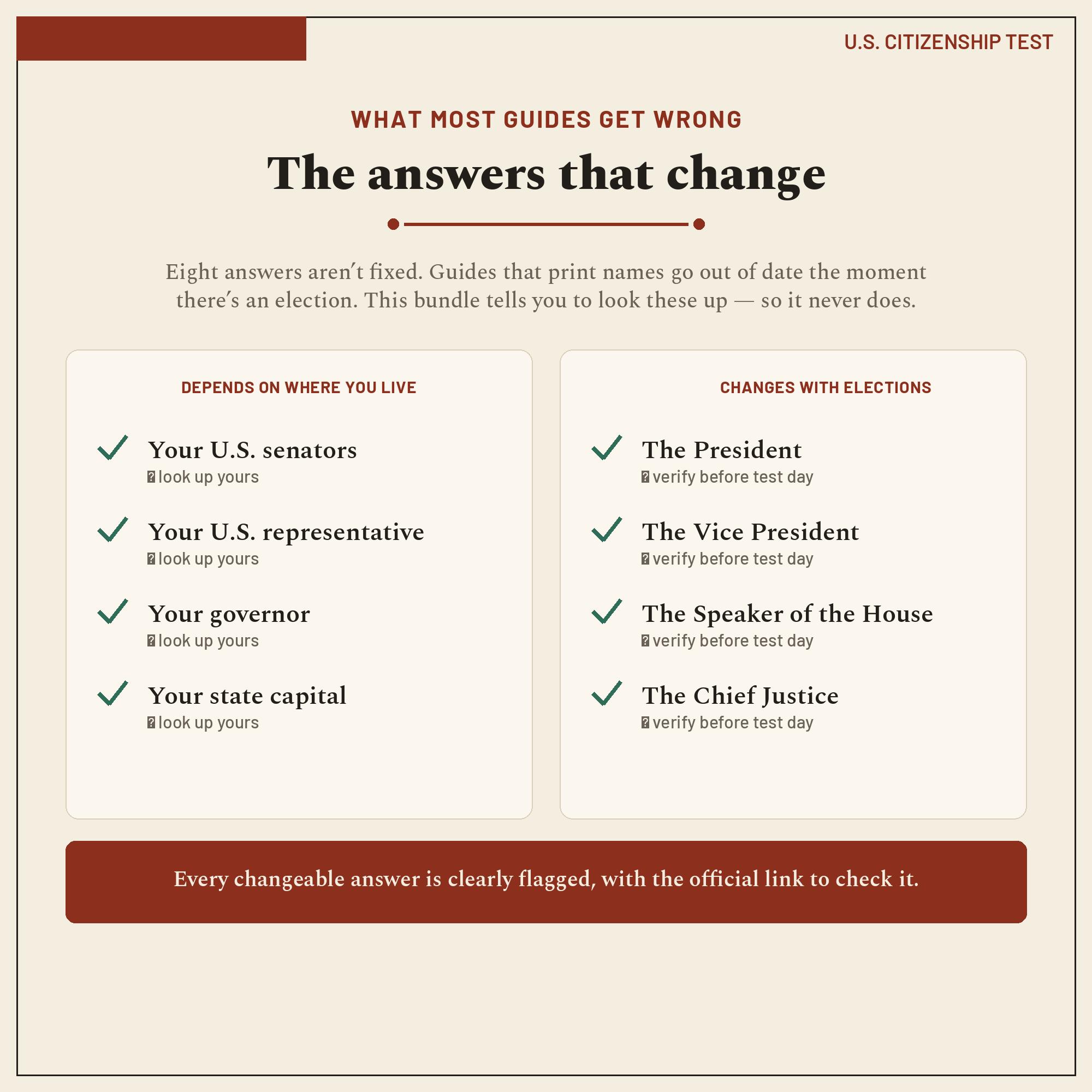
Studying the correct question list matters as much as studying at all, since the 65/20 list is a different, smaller set.
How to study for the 65/20 list
- Confirm your eligibility first. Double-check your exact filing date age and your lawful permanent resident anniversary against current USCIS guidance before assuming you qualify.
- Study the simplified list, not the full 128. Materials built for this exception mark which questions belong to the shorter list, so you're not spending time on content outside your actual test.
- Practice out loud. The civics test is administered as a spoken interview, so reading a question silently and answering it out loud under a little time pressure is a closer rehearsal than flashcards alone.
- Ask about the English exception too. Depending on your age and residency combination, the reading/writing requirement may also be waived or modified, which changes how you should split your study time.
Who this is for
- Applicants who are 65 or older and have held a green card for 20+ years and want to confirm exactly what they'll be tested on
- Family members helping an older relative prepare for the naturalization interview
- Anyone who started studying the full 128-question pool before realizing a shorter list might apply to them
Frequently asked questions
What is the 65/20 exception?
If you are 65 years or older on the day you file Form N-400, and you have been a lawful permanent resident for at least 20 years, USCIS gives you a shorter civics test: 10 questions drawn from a special study list, and you only need 6 correct to pass.
Do 65/20 applicants study the same questions as everyone else?
No. The 65/20 questions come from a dedicated, simplified subset of the civics question bank that USCIS marks specifically for this exception.
Does the English test change too?
The English reading and writing requirement can also be waived or modified depending on your age and residency combination, under separate USCIS exceptions sometimes referenced as 50/20 and 55/15. Confirm which category applies to you with current USCIS guidance.
How many questions does everyone else answer under the standard test?
Under the 2025 civics test, most applicants are asked up to 20 questions drawn from a 128-question pool and need 12 correct to pass, with testing stopping early at 12 correct or 9 incorrect.
Where can I officially confirm I qualify for the 65/20 exception?
USCIS.gov and the official Form N-400 instructions list the exact age and residency thresholds. This study bundle is prep material, not legal or immigration advice, so confirm eligibility directly with USCIS or an immigration attorney.
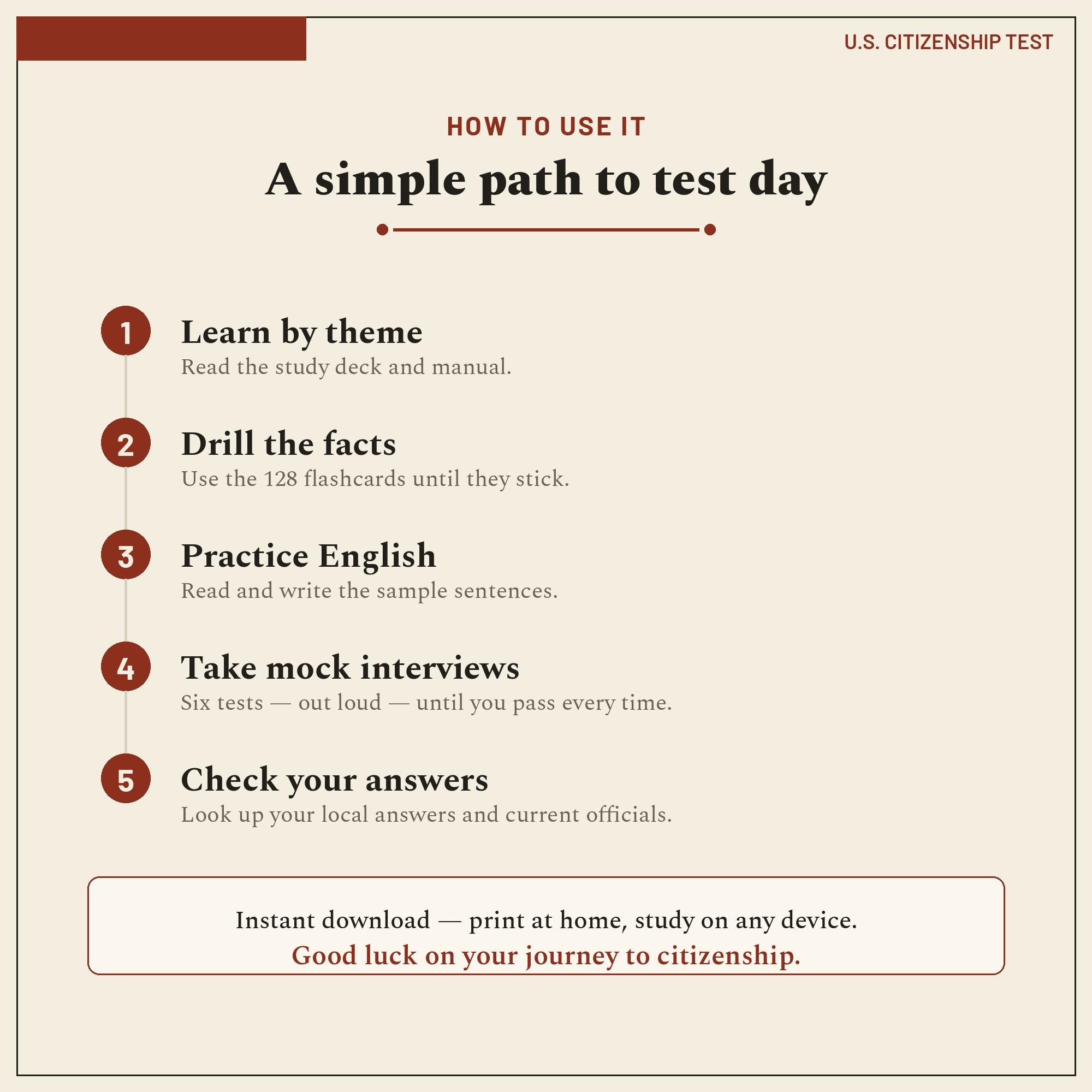
128 Q&A study guide, 128 flashcards, 6 mock interview practice tests, English practice, and a complete study manual, instant PDF download. Not affiliated with or endorsed by USCIS.