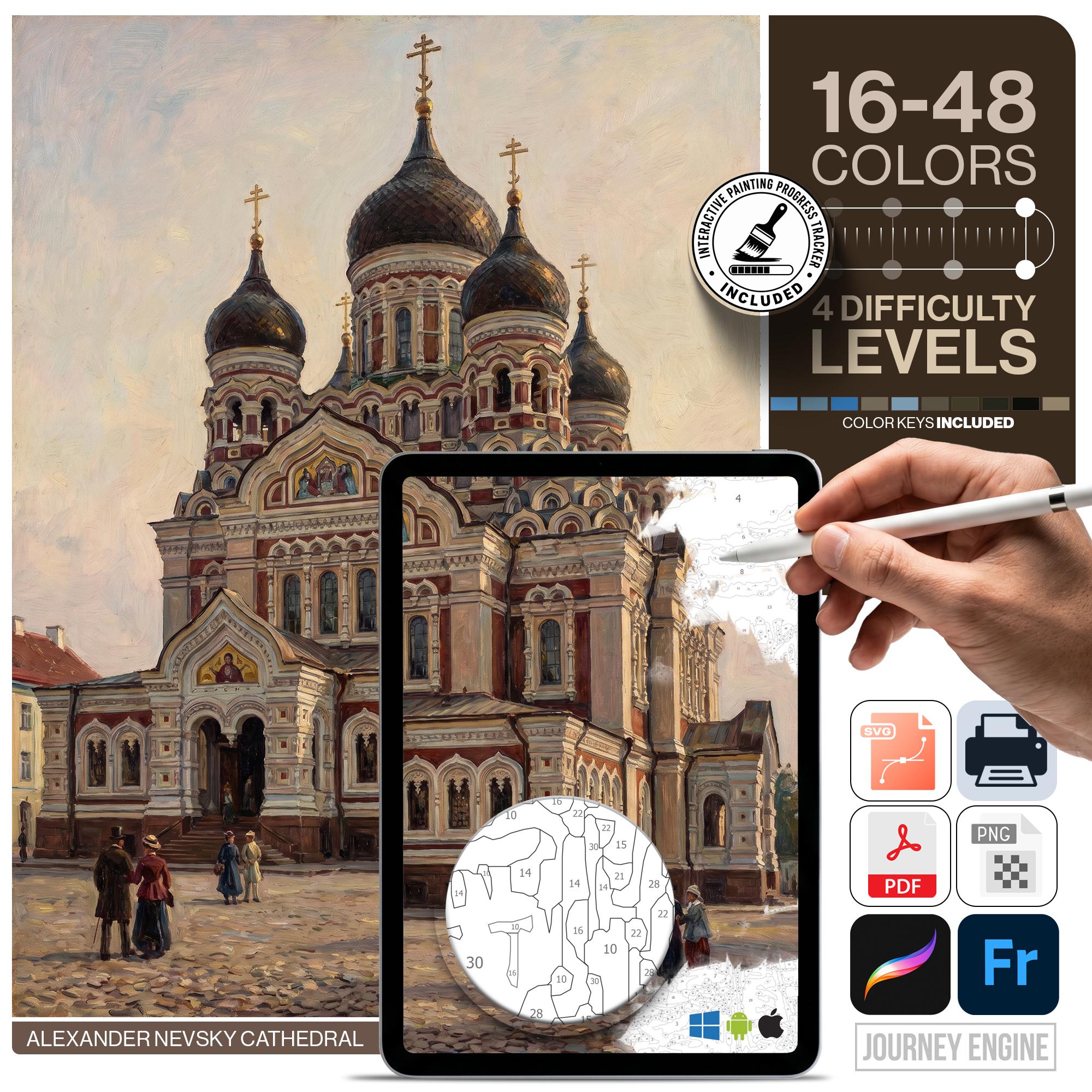
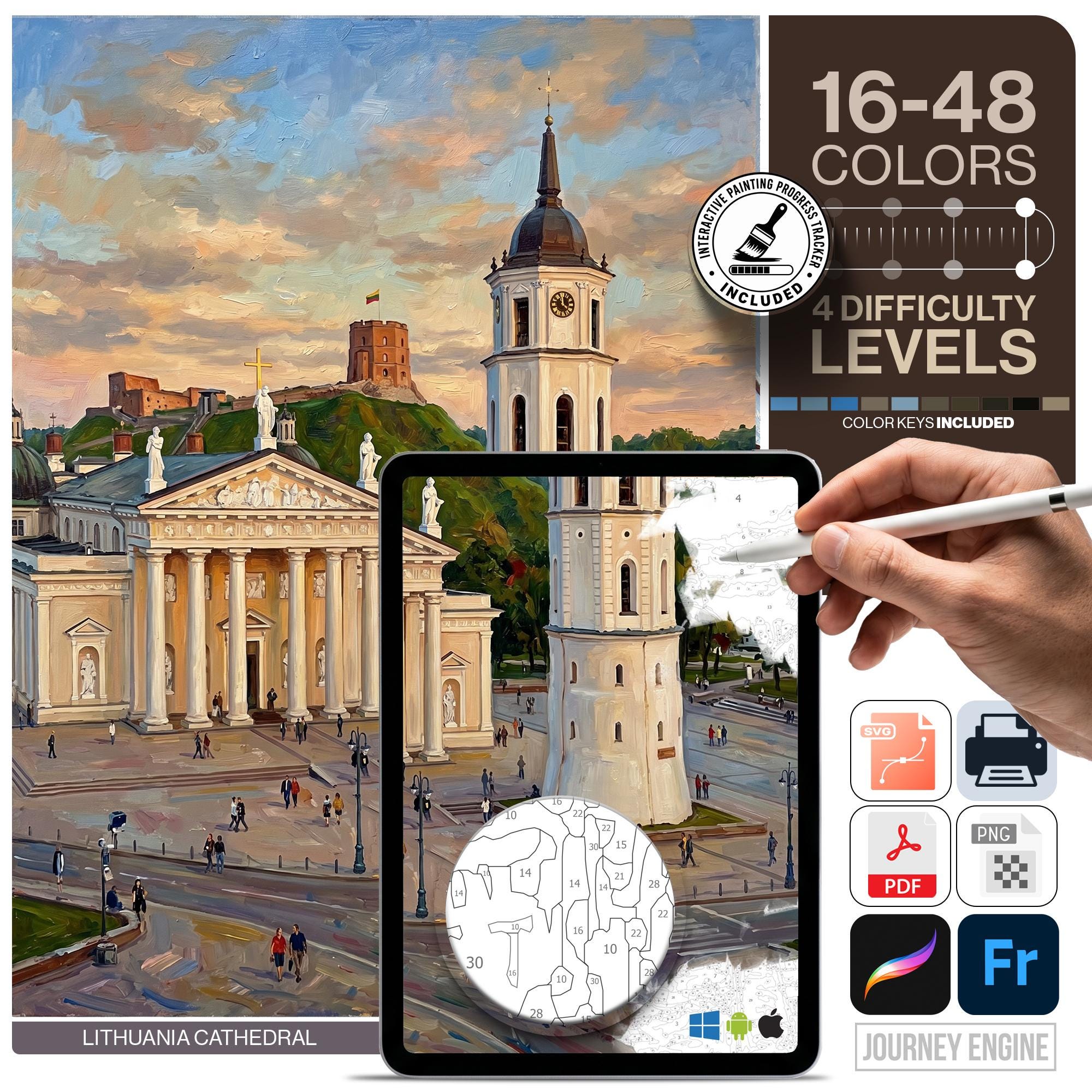
A closer look
Product description.
Scroll inside the box to read the full description.
🎨🏛️ Paint a 3,000-year-old cave city carved from a mountain — Uplistsikhe seen from below
The massive warm cream and coral sandstone rocky hillside dramatically towering above the viewer, honeycombed with an extraordinary maze of ancient rock-hewn cave openings, hollowed archways, carved stone streets and pagan temple facades cut directly into the sandstone rising against a deep cobalt sky with soft white clouds. Warm cream and coral sandstone catching brilliant afternoon light. Deep purple shadow settling into the cave openings and hollows. The massive natural rock face carved and shaped by 2,500 years of human occupation. Warm silhouette of a Georgian tour guide leading a small group of tourists up the ancient carved stone stairway cut into the rock face. Warm ochre and gold Georgian shortgrass steppe covered in wild yellow and coral wildflowers and warm ochre grass in the foreground at the base of the rock. Uplistsikhe seen from below is Georgia at its most ancient and most primal — the postcard shot of the pre-Christian Caucasus, and one of the oldest continuously inhabited settlements on Earth. And it is your painting.
Approach from below. Look up at 3,000 years. Let the brush find the coral. Paint it on your iPad or print it and paint on canvas — both are included.
━━━━━━━━━━━━━━━━━━━━━━
🎨 WHAT YOU GET
✔️ 5 difficulty levels — 16, 24, 48, 72 and 96 colors — beginner to expert in one download
✔️ 3 outline versions — numbered, blank and preview
✔️ SVG + PDF + PNG file formats — print at any size without blurring
✔️ Procreate colour swatches — drop the palette straight into your iPad
✔️ HEX-coded colour palette on every page
✔️ Instant digital download — nothing shipped
━━━━━━━━━━━━━━━━━━━━━━
✨ A LITTLE BIT OF HISTORY
Uplistsikhe — the name translates from Old Georgian literally as "the Lord's Fortress" — stands on the northern bank of the Mtkvari River in the Shida Kartli region of eastern Georgia, roughly 10 kilometres east of the town of Gori (the birthplace of Joseph Stalin) and 90 kilometres west of the capital Tbilisi. It is one of the oldest continuously inhabited settlements anywhere in the entire South Caucasus region, and one of the finest surviving examples of an ancient rock-hewn cave city anywhere in the world. Archaeological excavation of Uplistsikhe has documented continuous human occupation of the site from the Late Bronze Age (approximately the 12th century BC) all the way through to the Late Medieval period (the 15th century AD) — a span of over 2,700 years of continuous inhabitation. The site reached its peak of population and importance between the 6th century BC and the 11th century AD, when it served as one of the most important Silk Road caravan stops and pagan religious centres in the eastern Caucasus. During the Persian Achaemenid period (roughly the 5th-3rd centuries BC), Uplistsikhe was one of the major western outposts of the vast Achaemenid Persian trade network and was renowned throughout the ancient world as a centre of Zoroastrian fire-worship. During the subsequent Kingdom of Iberia (Kartli) period from the 3rd century BC to the 5th century AD, Uplistsikhe served as one of the principal royal cities of the pagan Iberian kings — many of whom held elaborate coronation ceremonies at the massive rock-hewn central ceremonial hall. Between the 4th and 5th centuries AD, when Christianity became the state religion of Iberia under King Mirian III (himself converted by St Nino, the woman who Christianised Georgia), most of Uplistsikhe's inhabitants converted to Christianity — and the pagan temples of the cave city were largely abandoned or converted into churches. Uplistsikhe was completely destroyed by the Mongol invasions of the 13th century, and the site was gradually abandoned during the 14th and 15th centuries — a final small monastic community continuing to occupy some of the caves until as late as the 19th century. The city itself is carved directly into a massive natural sandstone rocky hillside rising approximately 40 metres above the Mtkvari River. Over 2,700 years, generations of Iberian, Persian, and later Georgian occupants carved an entire urban network directly into the rock — including main ceremonial streets, a central pagan temple, private residential dwellings, wine storage cellars, granaries, water cisterns, defensive walls, watch-towers, and a large amphitheatre. At the peak of its occupation in the early medieval period, archaeologists estimate that Uplistsikhe contained over 700 individual rock-hewn cave dwellings and could accommodate a population of approximately 20,000 people. Today, approximately 150 of these rock-hewn structures survive in identifiable condition. The most-visited surviving structures include the massive Central Hall (a rock-hewn ceremonial hall with intricately carved barrel-vaulted rock ceiling, elaborately carved stone columns, and elegant geometric decorative motifs, believed to have served as the throne room of the Iberian kings), the Hall of Queen Tamar (named after the medieval Georgian Queen Tamar), the Wine Cellar (still containing several intact ancient kvevri — large terracotta wine-storage vessels partially buried in the stone floor, characteristic of Georgian traditional wine-making that dates back at least 8,000 years and was inscribed as a UNESCO Intangible Cultural Heritage tradition in 2013), and the 9th-century warm brick and stone Uplistsuli Basilica — a small Christian church built directly on top of the ancient pagan cave complex at the highest point of the hill. Uplistsikhe was inscribed on Georgia's tentative list for UNESCO World Heritage Site designation. Standing at the base of the massive honeycomb rock face at 2 PM on a September afternoon, watching afternoon sunlight catch 2,700 years of human hand-carved sandstone while a Georgian tour guide leads visitors up the ancient carved stone stairway toward the ancient throne room, is one of the most sacred and unforgettable archaeological experiences in all of the Caucasus.
━━━━━━━━━━━━━━━━━━━━━━
📥 HOW IT WORKS
1. Buy → your files are ready to download instantly (nothing is shipped)
2. Pick your difficulty level and your favorite outline version
3. Print it at home or at a copy shop — or load it onto your iPad in Procreate or any art app
4. Match each number to the HEX palette and paint section by section
5. Step back, admire it, frame it, and show it off 🏛️
━━━━━━━━━━━━━━━━━━━━━━
🎁 PERFECT FOR
- Georgian-born, Georgian-raised or Caucasus diaspora anywhere in the world
- Anyone who has climbed the Uplistsikhe stairs — or dreams of it
- Tbilisi, Gori and greater Georgian locals
- A meaningful gift for an archaeologist, a Silk Road historian, a Zoroastrian enthusiast, or a bucket-list explorer
- Fans of ancient civilisations, cave cities and pre-Christian pagan history
- Anyone building a Silk Road, ancient-ruins, or archaeology-themed wall
- Screen-free relaxation, mindfulness & art therapy
- iPad artists who want a warm, ancient Procreate project with a legendary silhouette
━━━━━━━━━━━━━━━━━━━━━━
🖌️ WANT YOUR OWN CUSTOM PAINTING?
Got a favorite view, a hometown, or a place that means something to you? Message me — I turn favorite places and photos into custom paint-by-numbers, made just for you. 📸
━━━━━━━━━━━━━━━━━━━━━━
❓ QUICK ANSWERS
- Is anything shipped? No — this is an instant digital download.
- Can I print it? Yes, at home or any print shop. The SVG scales to large posters without blurring.
- Do I need special software? No. Print and paint by hand, or open the files in Procreate / any art app on iPad.
- Can I sell my finished painting? It's for personal use only — please don't resell or redistribute the files.
⚖️ TERMS — For personal use only. This is a digital download; no physical product will be shipped. Colors may vary slightly between screens and printers. You may not resell, redistribute, share, or use these files commercially. All designs are © Journey Engine, all rights reserved.
Thanks for supporting a small studio 💛
— Journey Engine
DOWNLOAD ACCESS
After payment is confirmed, your download link is available in My library and your order email. Your purchase remains in your account for future access.