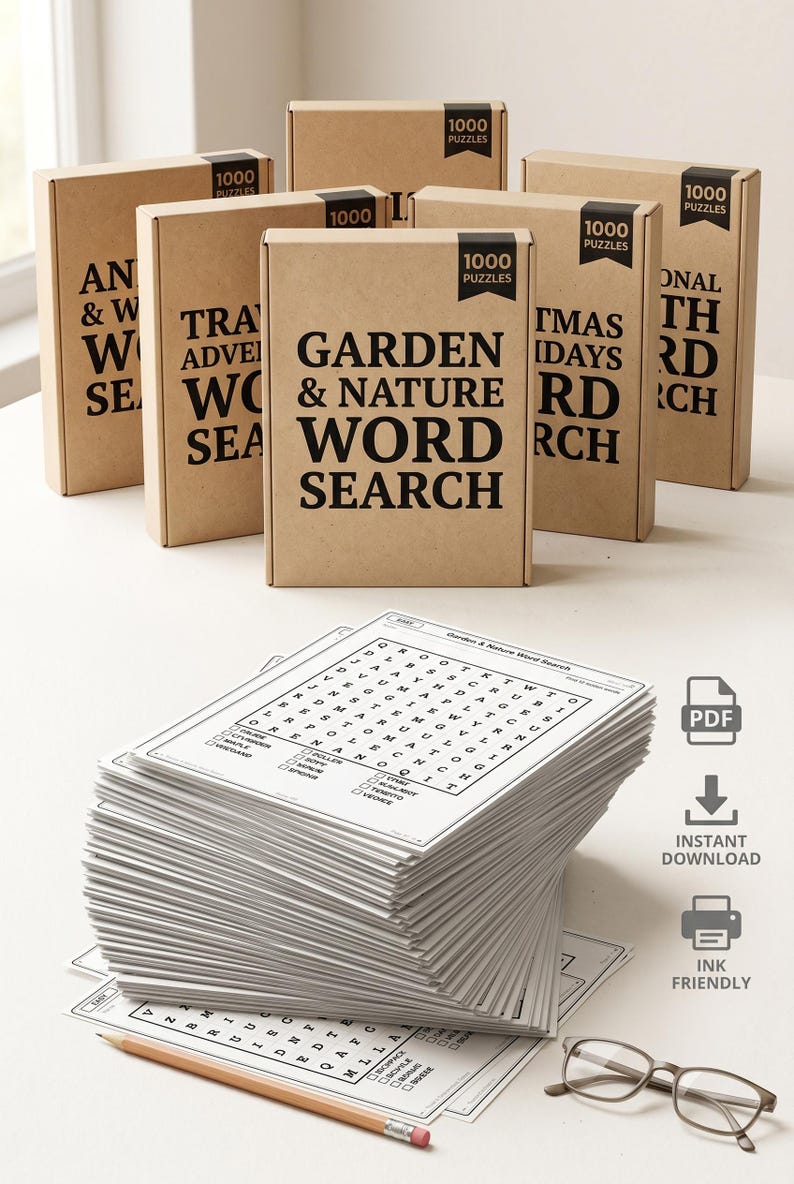
Somewhere in a lot of caregivers' routines, there's a stack of paper next to the good pen — word searches, printed the night before, ready for the morning. It's a small thing. It's also one of the most reliable ways to fill a quiet hour with something that feels like an accomplishment instead of just time passing.
We hear versions of the same message often: a family is printing puzzles daily for a parent or spouse who's recovering from something, adjusting to less mobility, or just needing a calm, screen-free way to spend an afternoon. The puzzles themselves are simple. What they're doing for that hour usually isn't.
Why "large print" isn't a nice-to-have
Vision changes with age are close to universal — reduced contrast sensitivity, slower focus adjustment, and a shrinking comfortable reading size are all normal parts of getting older, even without a diagnosed eye condition. A standard word search grid, sized for a 20-year-old's eyes, asks a 75-year-old to squint through the exact part of the activity that's supposed to be relaxing.
The fix isn't complicated: bigger letters, real black-on-white contrast, and grids sized so a glance is enough to tell letters apart. Printable puzzle guides built for seniors typically recommend scaling grid text up and printing at full contrast rather than the faded gray-on-white a lot of default puzzle generators produce — the difference in how long someone can comfortably sit with a puzzle is real, not cosmetic.
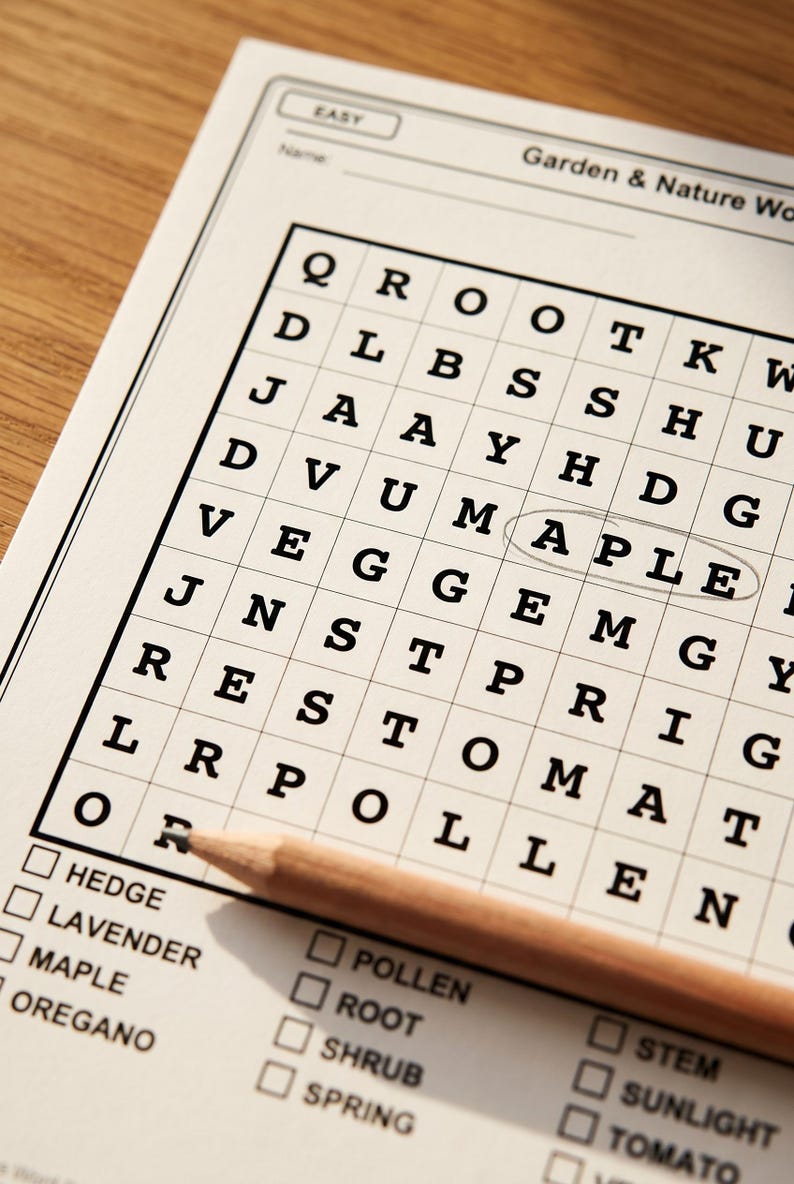
Bold, high-contrast letters with a name line at the top — details that matter more than they look like they should.
What a word search actually asks of the brain
A word search is a modest activity by design, and that's the point. It doesn't demand new learning or fast reactions — it asks for scanning, matching, and follow-through, three things that stay accessible well into cognitive decline in a lot of people. A few things it's doing underneath the surface:
- Language and word recognition. Searching for a known word reinforces the same semantic memory — meaning and word recognition — that everyday conversation draws on, which is part of why themed word searches are used in early-dementia and post-stroke settings.
- Visual scanning. Tracking rows and columns for a match is a structured version of the same visual-tracking skill used in reading and everyday navigation.
- Sustained attention. Finishing a grid takes a few uninterrupted minutes of focus — a small, achievable rep for attention span.
- A themed memory trigger. A garden-themed puzzle or a Christmas-themed one can open the door to a story or a memory in a way a blank crossword grid doesn't.
- A finished thing. Circling the last word and closing out the grid is a small, real win — a rare kind of task that starts and ends in one sitting.
Calm, not just occupied
There's also a quieter benefit that's easy to undersell: word searches are repetitive in a way that's genuinely calming. The scanning motion has a mild meditative quality, and the predictable structure — a fixed grid, a fixed word list, a clear finish line — gives a sense of control that a lot of other activities don't. It's part of why occupational therapists use word searches specifically for stress relief, not just cognitive practice.
They're also refreshingly low-tech. No app to open, no account to log into, no screen brightness to fight with in a sunny room — just paper, a pencil, and a few minutes. For anyone trying to cut down a loved one's screen time without taking away something to do, that matters.
What this looks like in practice — the 5,000-Puzzle Mega Bundle
This is the exact idea behind Journey Engine's large-print word search bundle: five printable books, each with 1,000 unique puzzles, built specifically for adults and seniors rather than adapted from a general puzzle template.
- 5,000 unique large-print puzzles across 5 themes — Garden & Nature, Travel & Adventure, Christmas & Holidays, Animals & Wildlife, and Inspirational & Faith
- 3 difficulty levels in every book — Easy (10×10, 12 words), Medium (14×14, 15 words, diagonals), and Hard (17×17, 18 words, all 8 directions)
- Bold, high-contrast black-on-white letters with zero wasted ink
- A name line at the top of every page — built for care-home and activity-log tracking
- Alphabetical word lists with checkboxes, and a complete answer key for every single puzzle
- A 1,000-box progress tracker at the back of each book
- At roughly a puzzle a day, that's close to 14 years before a single grid repeats
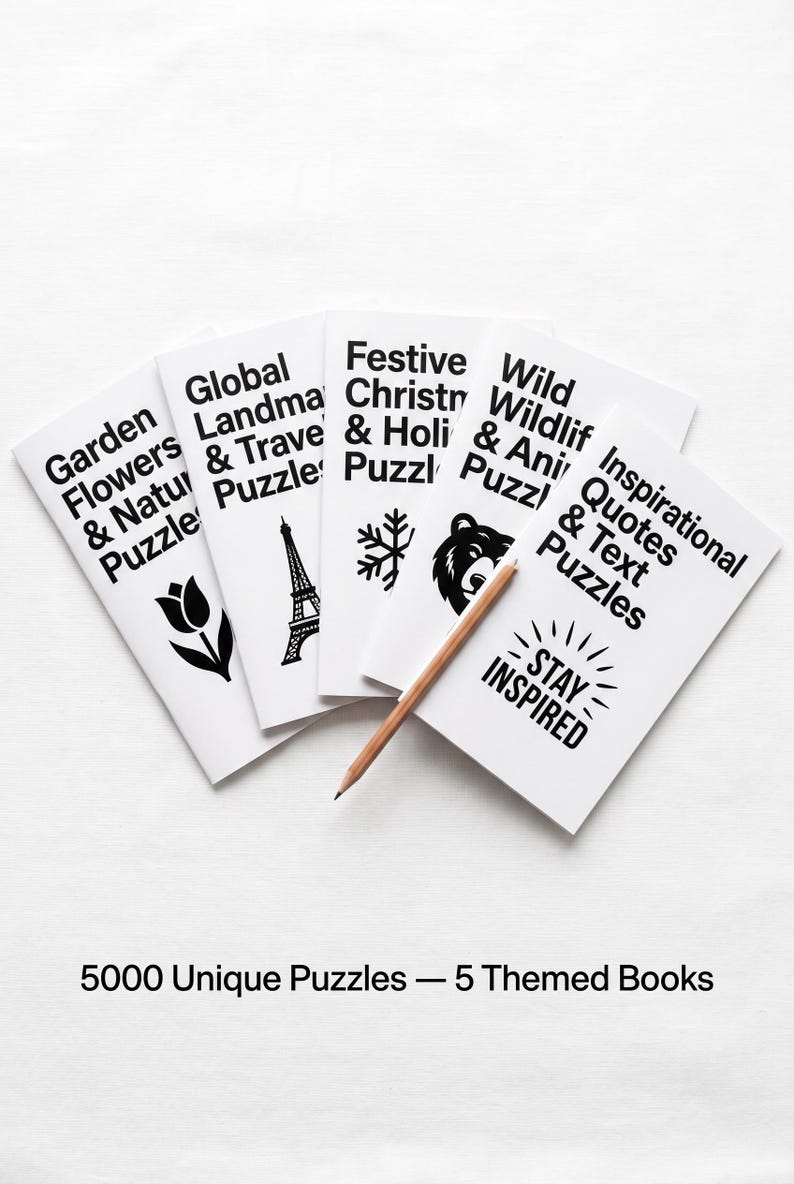
Five books, five themes — enough variety that "the puzzles" don't start feeling like homework.
Built for the person doing the printing, too
Anyone who prints activities daily — a family caregiver, an activity director working through a resident list, an occupational therapist prepping a session — knows the real cost isn't the puzzle, it's the ink and the time. Every page in this bundle is pure black on white with no colored backgrounds or decorative fills, so a single sheet costs pennies whether you're printing one puzzle or a week's worth for a whole facility.
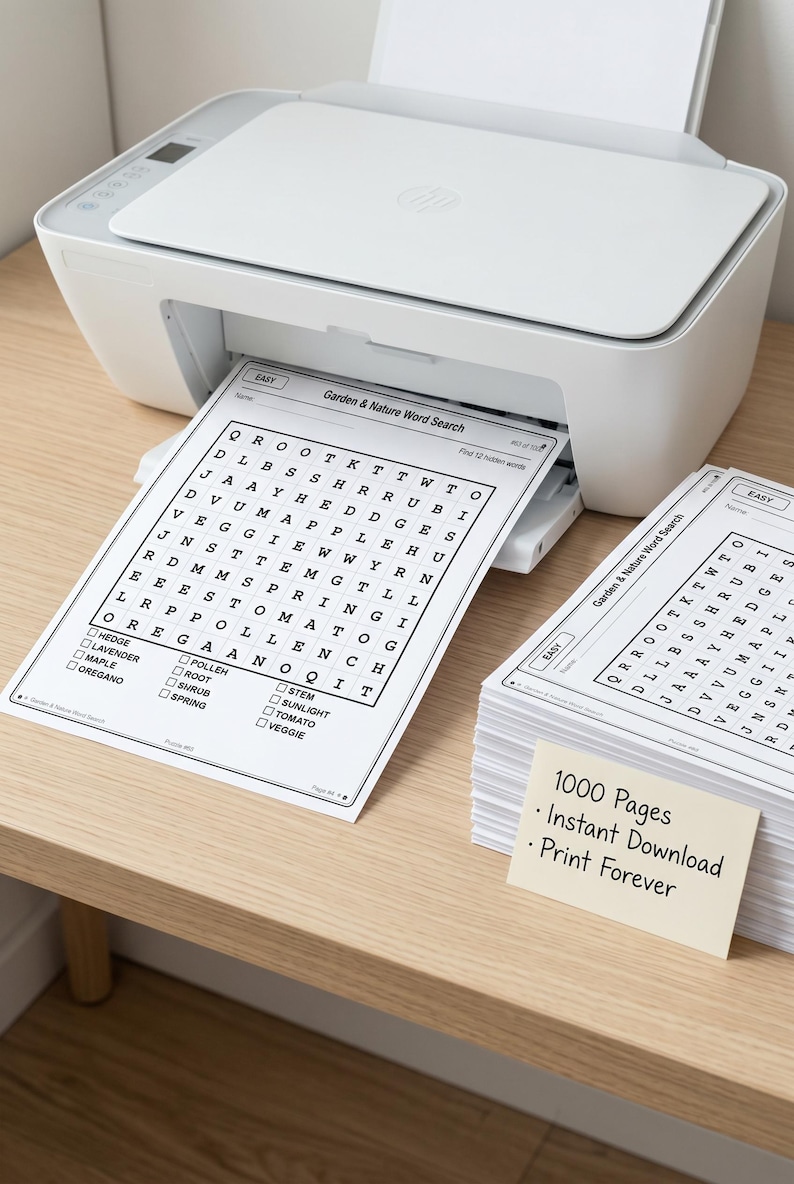
Print one at a time, print a week ahead, or print the whole book — the ink budget stays sane either way.
The bundle also comes with a commercial resell license, which is less common than it should be in this category — care homes, memory-care facilities, and therapy practices can print and use it freely, and Etsy sellers, KDP publishers, and printable shops can rebrand and resell it as their own, no logos or watermarks attached.
Who this is actually for
- Family caregivers who want a daily activity that doesn't require setup or supervision
- Care home and assisted-living activity directors printing for a full resident list
- Occupational therapists and memory-care specialists building session materials
- Anyone recovering from an illness, injury, or surgery who wants a calm, low-pressure way to fill the hours
- KDP publishers and Etsy sellers who want a done-for-you, resell-ready puzzle catalog
Frequently asked questions
Why does large print matter so much for word searches specifically?
A word search asks someone to tell similar letters apart at a glance, over and over, for several minutes at a time — it's one of the most vision-dependent puzzle formats there is. Small or low-contrast grids turn a relaxing activity into an eye-strain exercise, which is exactly the opposite of the point.
Is this appropriate for someone with dementia or significant cognitive decline?
Word searches are commonly used in memory-care and early-dementia settings because they lean on skills — word recognition, visual scanning — that tend to stay accessible longer than skills required by more complex puzzles. The Easy level (10×10, 12 words, horizontal and vertical only) is the gentlest starting point in this bundle. As always, an activity director or occupational therapist is the best judge of fit for a specific person.
Can I use this in a care home or therapy practice?
Yes — the bundle includes a full commercial resell license, which covers printing and using the puzzles in a care home, memory-care facility, or therapy practice, as well as reselling or rebranding them as your own product.
How many puzzles are actually in the bundle, and will we run out?
5,000 unique puzzles across 5 themed books. At one puzzle a day, that's close to 14 years before a single grid repeats — it's a one-time purchase, not a subscription.
Will printing this daily wreck my ink budget?
Every page is pure black text on a white background with no colored fills or decorative borders eating ink, so a single printed puzzle costs a small fraction of a typical printable page.
Instant PDF download · 5 books, 5 themes · commercial resell license included