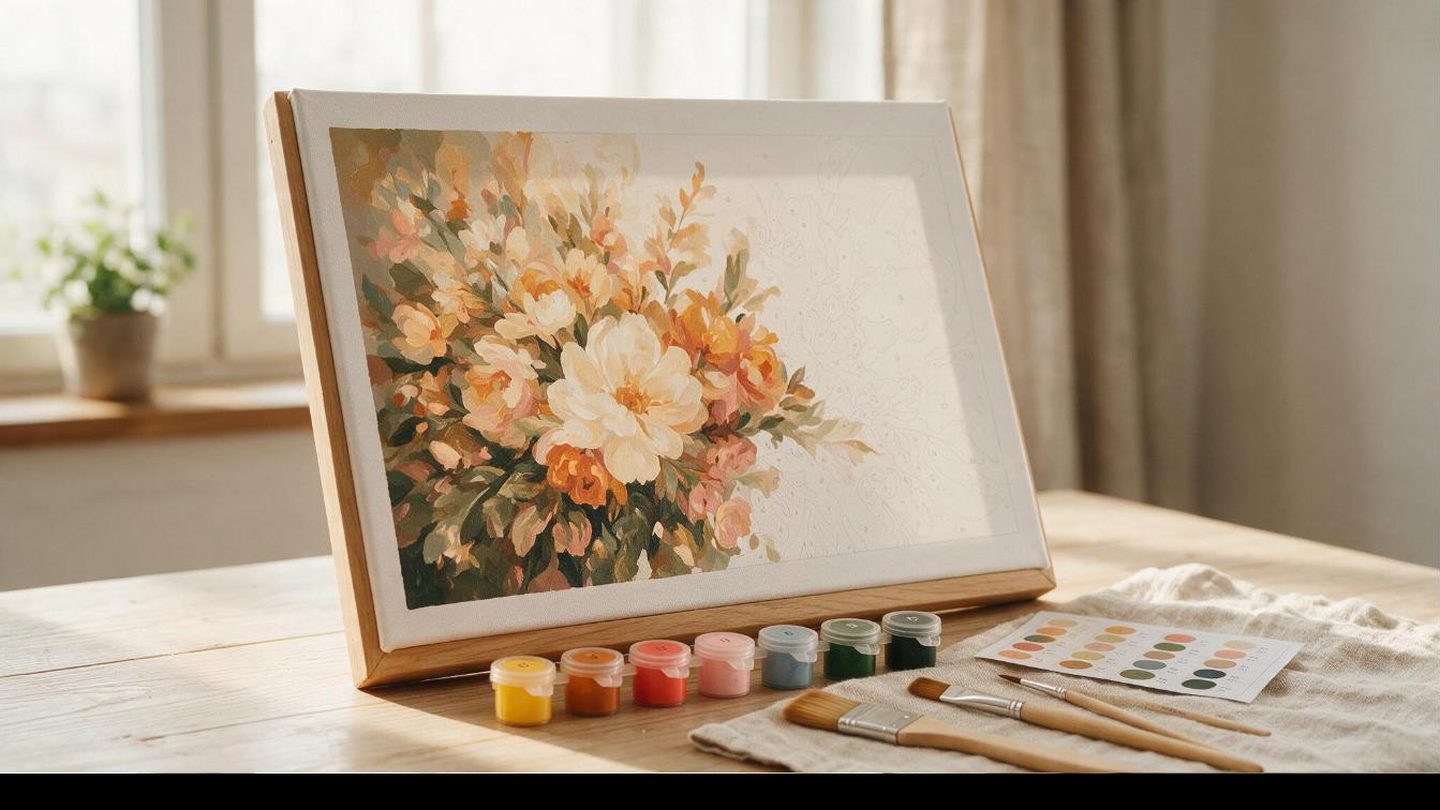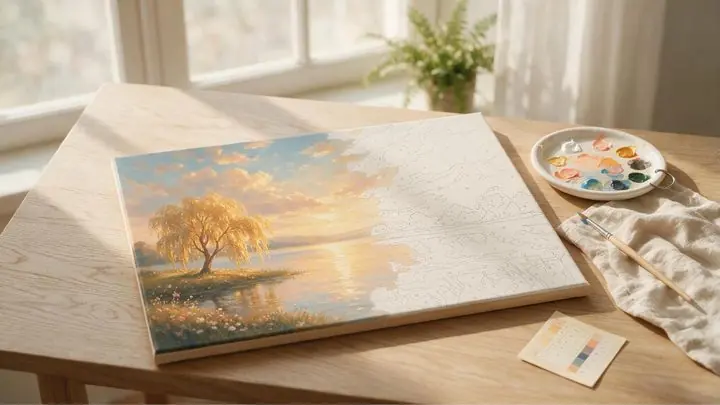
How to fix a wrinkled paint by numbers canvas
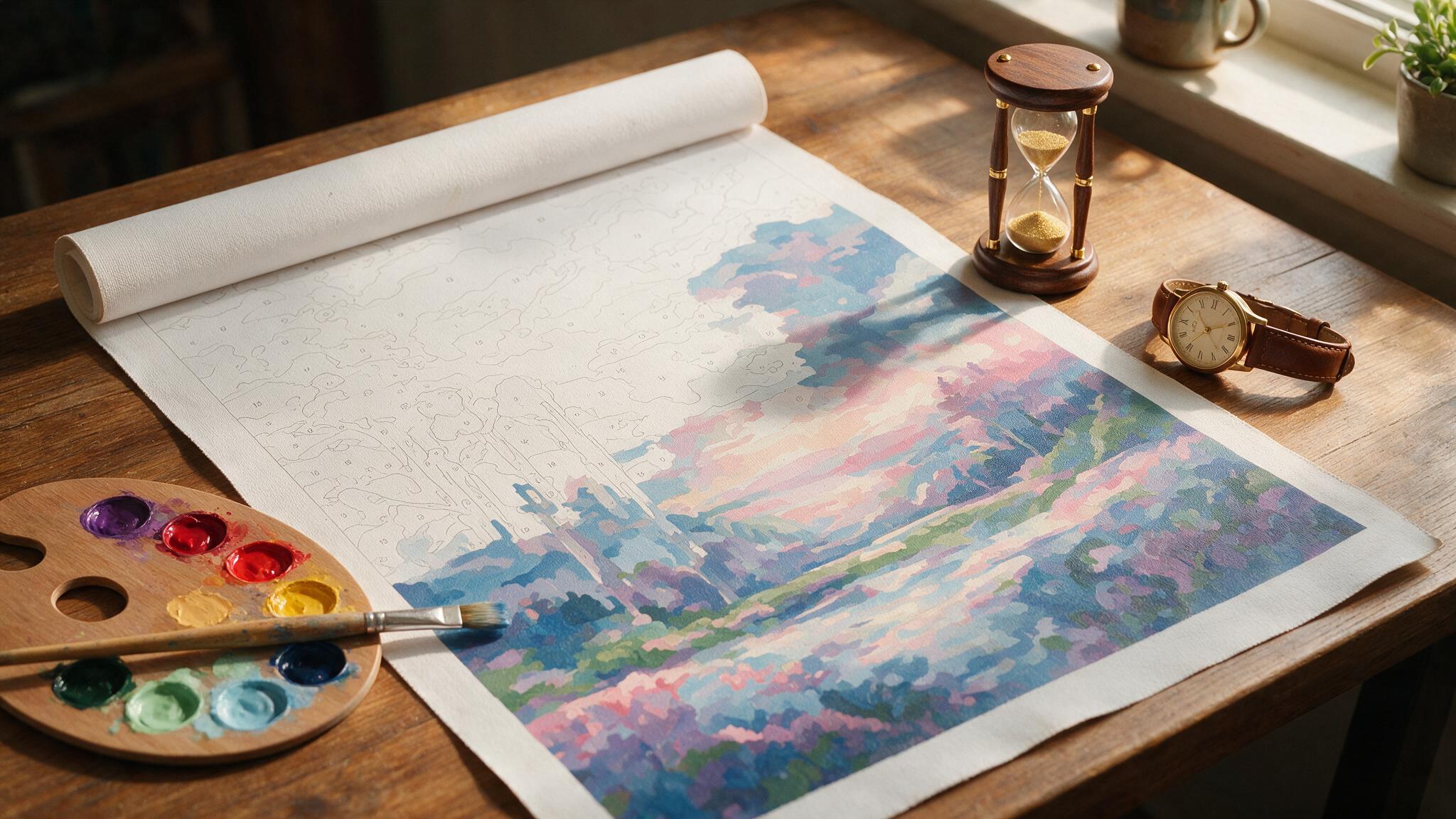
You unroll a brand new paint by numbers canvas and instead of lying flat, it curls straight back up like a scroll, or worse, it has a crease running through the middle of the design. Before you assume something went wrong, this is one of the most common complaints with rolled canvases, and every one of the fixes below uses things you already have at home.
The short answer
Canvases wrinkle and curl because they are rolled tightly for shipping and the fibres hold that shape. Flatten one by reverse-rolling it, weighting it flat overnight under books, or a light steam pass with an iron on the back. A crease from a shipping fold is the only kind that sometimes will not fully release. If you would rather not deal with any of this, a digital kit on a tablet has no canvas to warp in the first place.
Why rolled canvases do this
Canvas is a woven fabric, usually cotton or a cotton-poly blend, coated with a printed design layer. Roll it tightly around a shipping tube and leave it there for a week or two in transit, and the fibres and the print coating both take a set in that curled shape. It is the same reason a rolled up poster fights you when you try to lay it flat, just with the added texture of a canvas weave.
A crease is different from a curl. A curl is the fabric remembering its rolled shape evenly across the whole sheet. A crease is a sharp fold line, usually from the canvas getting bent during packing rather than rolled cleanly, and it can leave a faint line in the print even after the canvas is flat again.
Three ways to flatten it
Fix 1: Reverse roll
- Roll the canvas the opposite direction from how it arrived, design side out, as loosely as you can manage.
- Hold that reverse roll for a few minutes, then let it relax. Repeat two or three times.
- This works well on a mild curl and needs nothing but your hands, but it rarely fixes a sharp crease on its own.
Fix 2: Weight it flat overnight
- Lay the canvas flat on a table, design side up, on a clean surface.
- Cover it with a clean sheet of paper so nothing transfers onto the print.
- Stack heavy, flat books evenly across the whole canvas, not just the corners, and leave it overnight.
- This is the slowest option but the gentlest, and it is the one we recommend if the canvas is not going under paint for a day or two anyway.
Fix 3: Low heat from the back
- Turn the canvas face down on a towel, printed side protected against the towel.
- Set an iron to its lowest setting, no steam, and press gently on the back for a few seconds at a time, moving constantly.
- Flip it over and check often. Heat relaxes the fibres fast, so a few short passes beat one long one.
- Never rest the iron in one spot, and never iron the printed side directly, both risk scorching the coating or smearing the print.
What if a crease will not fully release
A shipping crease sometimes leaves a faint line even after the canvas lies flat, especially if it happened before the canvas was fully dry from printing. If a crease sits inside an area you have not painted yet, it will usually disappear completely once paint covers it, since paint fills the small surface texture a crease leaves behind. A crease across a large open background is more noticeable, but it is very rarely visible in the finished piece once framed.
If a canvas arrives creased badly enough that you are worried about it, most shops (ours included) will replace it, so it is worth a quick photo and a message before you spend an evening trying to flatten a genuinely damaged one.
The kits that never have this problem
A rolled canvas has to survive shipping, which is exactly why it curls. A digital paint by numbers file sidesteps that step completely, since there is nothing to roll, warp or crease in the first place. Paint it on a tablet in an app like Procreate and you are working on a flat digital layer from the first brushstroke to the last, or print it flat at home on regular paper if you would rather work with a real brush and stay off screen.
Our newest line, PBN Projects, ships as an instant download for exactly this reason. Forty one designs, six difficulty levels each from a relaxed 16 colours up to a 120 colour bonus tier, and no canvas tube to wrestle flat before you can even start.
Skip the canvas problem entirely
PBN Projects is a digital download line, print it flat at home or paint it directly on a tablet. Forty one designs, six difficulty levels, up to 120 colours.
Browse PBN Projects →Will ironing damage the printed design?
Not at a low, no-steam setting pressed against the back of the canvas rather than the printed side. Keep the iron moving and check frequently, and it will not scorch or smear.
Can I flatten a canvas after I have started painting it?
Yes, though it is easier before paint goes on. If a curl shows up mid-project, the weighted-books method works fine on a partly painted canvas as long as the paint is fully dry first.
Does stretching the canvas onto a frame fix the curl automatically?
Mostly yes. Stretching pulls the fabric taut over a frame, which resolves a mild curl on its own. A sharp crease can still leave a faint texture line even once stretched, though paint usually hides it.
How long does a canvas stay wrinkled if I do nothing?
Longer than you would expect, sometimes weeks, since the fibres have genuinely taken a set from the tight roll. It is worth the ten minutes to flatten it rather than waiting it out.