16 vs 120 colours: what actually changes
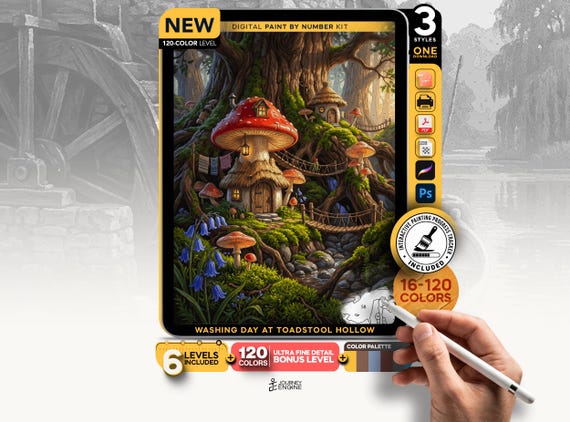
Every paint by numbers listing shows a colour count somewhere in the title, and it is easy to assume a bigger number just means a fancier kit. It actually changes something much more concrete: how big each region is, how much your eye has to blend, and how many hours the canvas takes from first coat to last. Here is what actually shifts as you move up.
The short answer
A higher colour count breaks the same image into smaller, more numerous regions with subtler shifts between neighbouring shades. That means finer detail and smoother gradients in the finished piece, at the cost of more time, more careful brush control, and more colours to keep track of. Sixteen colours suits a relaxed first project or a quick decorative piece. Ninety six to 120 colours suits someone who wants a result closer to a painted portrait than a craft project.
What the colour count is actually counting
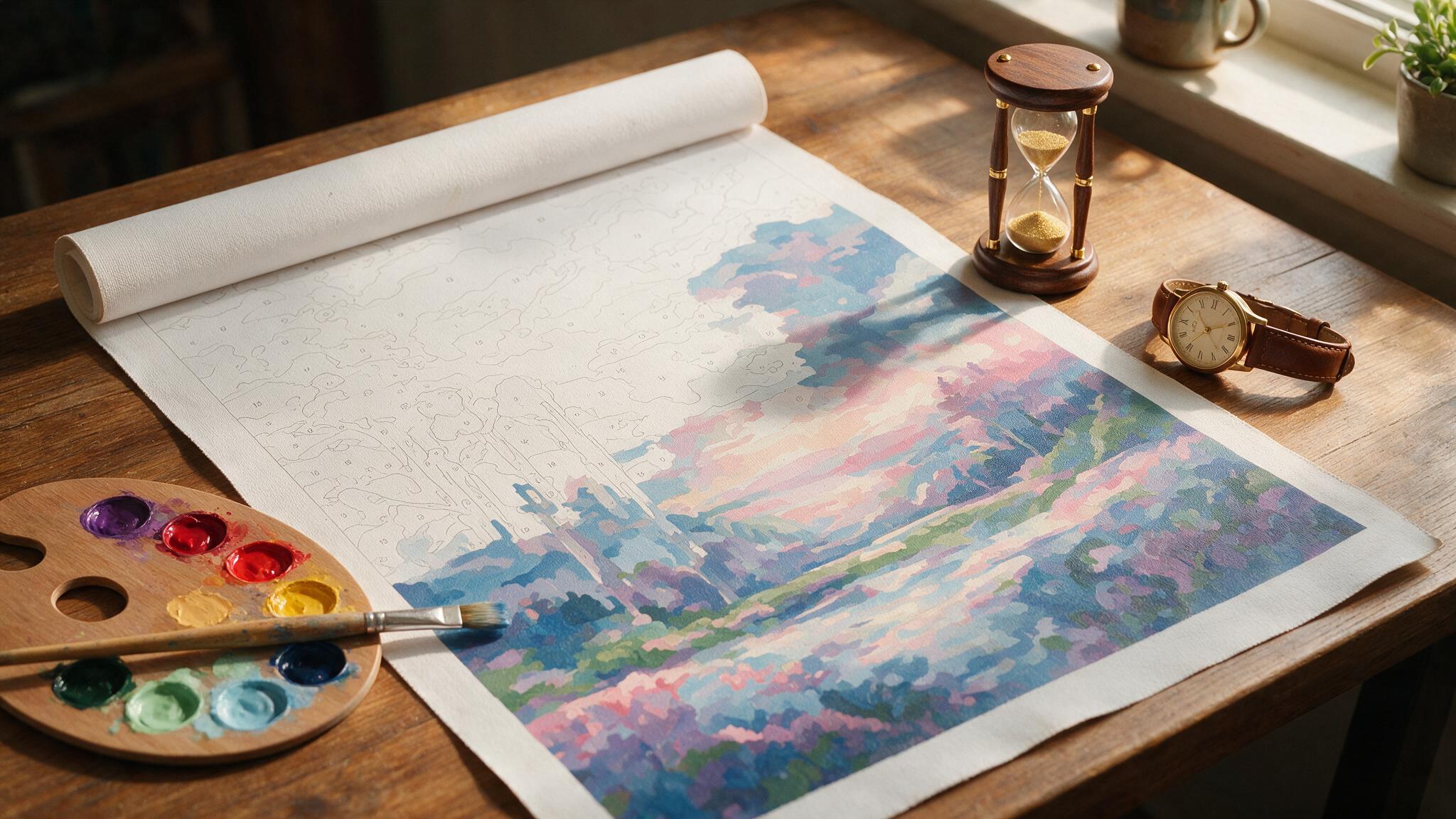
The number refers to how many distinct paint regions the reference image gets divided into, each assigned its own numbered colour. A 16 colour version of a design uses 16 broad regions and 16 paint pots. A 120 colour version of the exact same design uses 120 narrower regions and 120 paint pots, most of them subtly different shades of the same handful of hues. The image is the same, the resolution the paint by numbers process breaks it into is what changes.
This is why the same design can exist at multiple colour counts, ours included. It is not a different picture, it is the same picture rendered at a coarser or finer level of paint detail.
Level by level, what changes
| Colours | Region size | Best for | Typical time |
|---|---|---|---|
| 16–24 | Large, simple | First-timers, kids, quick pieces | 4–8 hours |
| 36–48 | Medium | Comfortable hobbyists wanting more detail | 10–18 hours |
| 60–96 | Small, layered | Experienced painters, portraits, wildlife | 20–35 hours |
| 120 (bonus tier) | Very small, fine gradients | Painters who want a gallery-level finish | 35+ hours |
Time ranges vary a lot by canvas size and how careful you are with edges, but the pattern holds across every kit we have made or seen: each jump up in colour count roughly doubles the attention each region demands, because the regions get smaller and the neighbouring shades get closer together.
What actually gets harder
Three things change as the colour count climbs, and it is worth knowing which one will bother you before you buy:
- Brush control. Smaller regions need a smaller brush tip and steadier hands near the edges. A 16 colour region might be the size of a coin, a 120 colour region can be the size of a fingernail.
- Colour matching. At 120 colours, several numbered pots can look nearly identical in the tray and only read as distinct once painted next to each other. Good lighting and checking the printed number twice matters more than at lower counts.
- Time and patience. This is the big one. More regions simply means more individual brushstrokes, full stop, regardless of skill.
What does not get harder is the actual decision-making. You are still matching a printed number to a labelled pot and staying inside a line, the core mechanic never changes. A first-timer can absolutely start at 96 or 120 colours if they have the patience for a longer project, it is not gatekept by skill the way it might look from the box art.
Why we built PBN Projects with six levels on the same design
Most kits force the choice up front: buy the easy version or the detailed version, and live with it. Our PBN Projects line instead gives every one of its 41 designs across six difficulty levels, from a relaxed 16 colour version up to a 120 colour bonus tier, so you can start where you are comfortable and move up on the next canvas rather than guessing which tier suits you before you have ever tried one.
It also means a design you love does not have to be off limits because the only version available was more detailed than you wanted, or too simple to hold your interest for more than an evening.
Pick your level, not just your design
Forty one designs, each available from 16 up to a 120 colour bonus tier. The highest colour count we have found anywhere in the paint by numbers market.
Browse PBN Projects →Should a beginner ever start at 96 or 120 colours?
Yes, if the time commitment does not put you off. The skill required is the same as a 16 colour kit, matching numbers to pots, it just takes considerably longer and asks for steadier brush control near small edges.
Does a higher colour count kit cost more?
Usually only a little, since it is the same design at a different level of detail rather than a different product. The bigger cost is time, not price.
Can I mix and match, painting some regions loosely and others precisely?
You can, it is your canvas. Painters who want a faster result on a high colour count kit sometimes group two or three adjacent numbered shades into one colour by eye, which speeds things up at a small cost to the finished gradient.
Is 120 colours the highest available anywhere?
It is the highest we have found across the paint by numbers market as of this writing, offered as a bonus tier on our PBN Projects line. Most kits top out well below that, commonly in the 24 to 48 range.