Why Adult Coloring Actually Helps You Relax
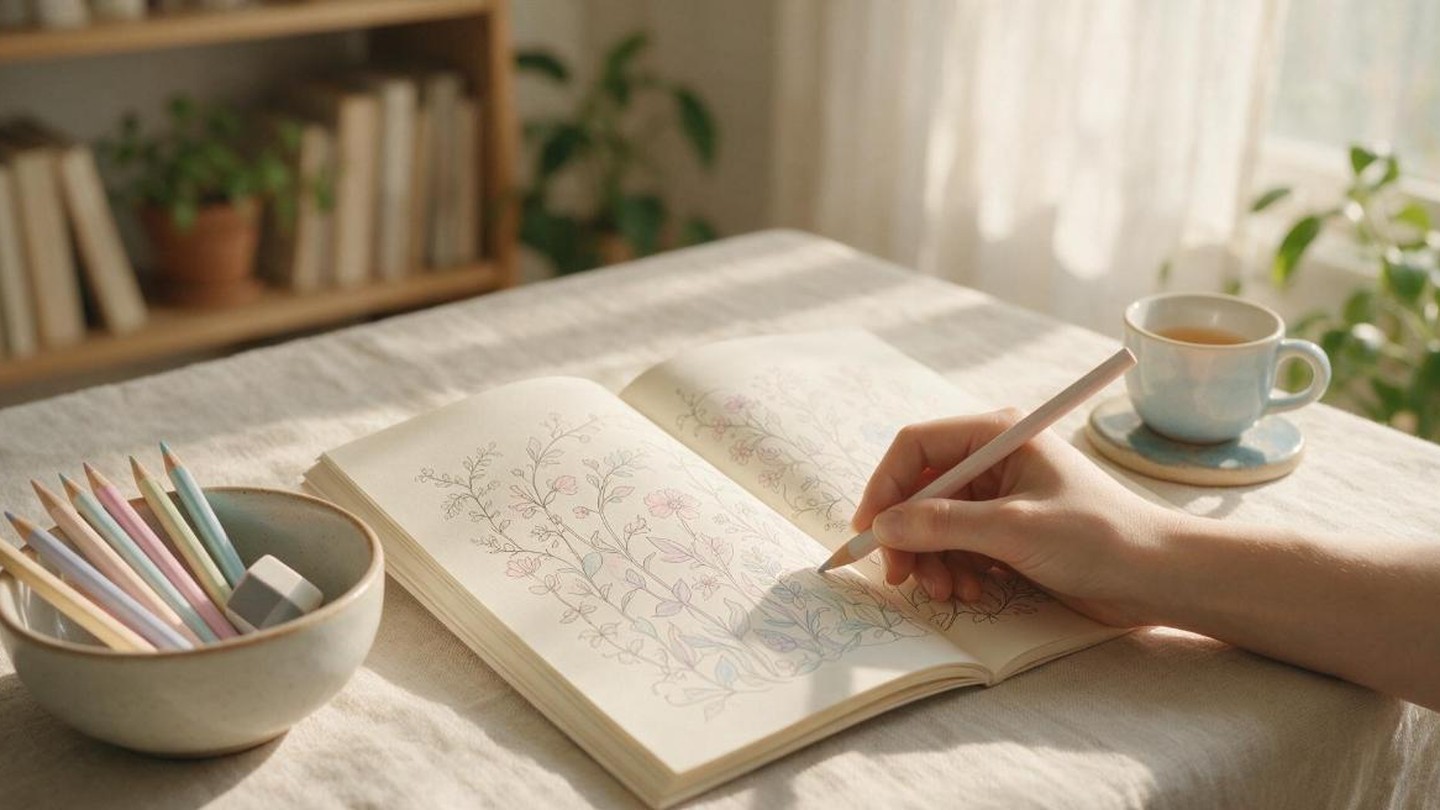
Adult coloring got big enough, fast enough, that it is easy to write off as a fad — a trend that peaked with mandala books at the checkout aisle. But the calming effect people describe is not just nostalgia or marketing. There is a real, fairly simple mechanism behind why filling in a printed pattern can quiet a busy mind, and knowing how it works helps you actually get the benefit instead of just owning the book.
Is coloring actually good for your brain, or just relaxing?
Both, and it is genuinely therapeutic in the everyday sense of that word, not the clinical one. Filling in a detailed pattern narrows your attention enough to crowd out anxious, looping thoughts, which is close to what meditation does without asking you to sit still and do nothing. A frequently cited University of Otago study found that colouring geometric, mandala-style patterns lowered anxiety more than colouring on plain paper or not colouring at all, after a single short session.
What is actually happening in your brain
Coloring a detailed pattern asks for a narrow, specific kind of attention: pick a colour, stay inside a line, move to the next shape. That is close to what researchers call an attention-narrowing task — one absorbing enough to crowd out the looping, worry-driven thoughts that keep a mind busy at rest. A frequently cited study out of the University of Otago found that colouring geometric, mandala-style patterns lowered anxiety more than colouring on plain paper or not colouring at all, and the effect showed up after a single short session.
It shares real ground with meditation, but without asking you to sit still and do nothing, which is exactly the part a lot of people find hardest. Your hands are busy, your eyes have a job, and the "clear your mind" part happens as a side effect rather than the goal.
Why patterns beat blank paper
This is the detail most people miss: a blank page is not the same tool. Free drawing still asks you to make decisions — what to draw, how to compose it — and decision-making keeps the planning part of your brain switched on. A pre-drawn pattern removes that layer. All the creative decisions left are small and low-stakes: which blue, which section next. That is what makes it restful instead of just another task.
It is also why busier, more intricate designs tend to work better for this specific purpose than simple ones. A page with plenty of small enclosed shapes gives your attention somewhere to keep landing. A sparse design runs out of places to focus and your mind wanders back to whatever it was trying to avoid.
Getting the calming effect on purpose
A few things make the difference between colouring as background noise and colouring as an actual reset:
- Put the phone somewhere else. The whole benefit comes from single-tasking. A phone within reach turns it back into a split-attention activity.
- Pick a pattern that is busy enough to hold you. If you are finishing a page in four minutes and reaching for the next one out of boredom, go denser.
- Do not chase a perfect result. Colouring outside a line or picking an odd palette does not matter. Treating it like a performance brings the self-judgement right back in.
- Give it fifteen to twenty minutes. Long enough to actually settle into it, short enough that it is realistic on a weeknight.
When it helps most
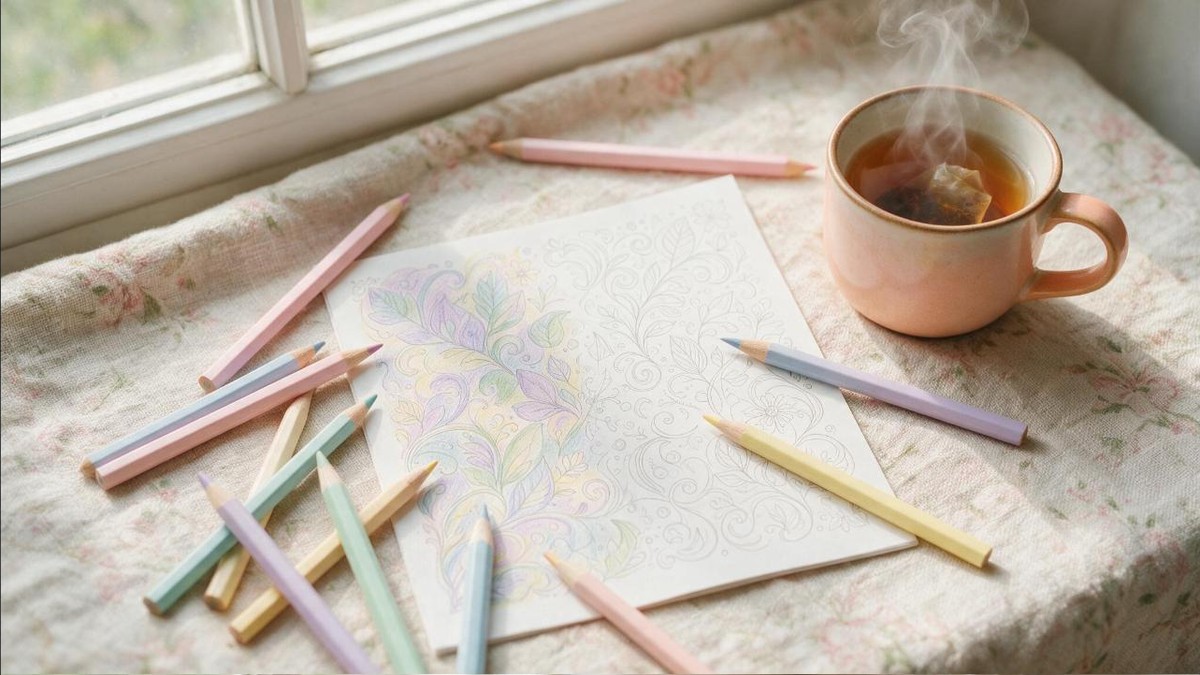
People reach for it in a few recurring moments: winding down before bed instead of scrolling, taking a real break mid-workday instead of another cup of coffee, or as something to do with your hands during a phone call or a podcast. It is also a common alternative for people who find seated meditation difficult to stick with, since it gives restlessness somewhere useful to go.
Coloring for older adults and memory care
This is a specific, recurring question, usually from someone searching on behalf of a parent or a patient rather than themselves: is coloring appropriate for dementia patients? In general, yes, and it is a common low-demand activity in memory care and assisted living settings for exactly the reason above — it gives restless hands and attention somewhere gentle to go, with no test to fail and no memory of the last page required to enjoy the next one.
A few adjustments help. Simpler, larger-print patterns work better than the same dense mandala designs that help a busy mind, since the goal shifts from holding attention to reducing frustration. Familiar, concrete subjects — flowers, animals, everyday objects — tend to land better than abstract geometry. And this is general wellness information, not medical advice: for anyone managing a diagnosed condition, loop in the care team on what activities suit that person specifically. There is a fuller, dedicated guide in coloring pages for dementia patients.
Where to start
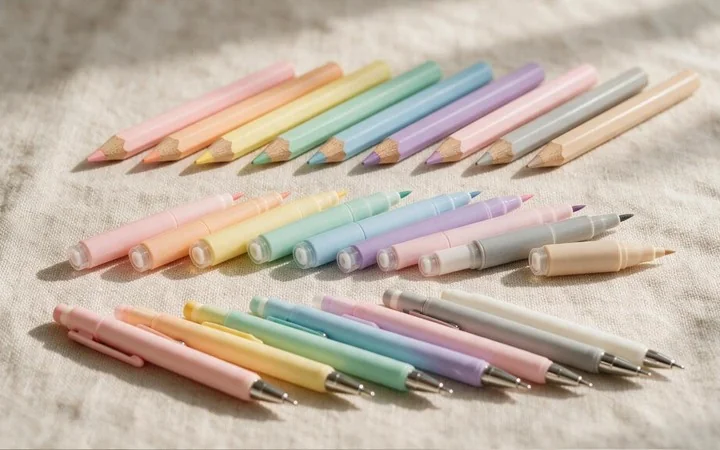
You do not need a specialised "anti-stress" book to get the effect — any densely patterned design does the job. If you want to test it before buying anything, our free printable coloring pages post links to pages you can print tonight. Once you know it works for you, the next question is usually what to colour it with — our guide to pencils, markers and pens covers that.
Patterns worth sitting down with
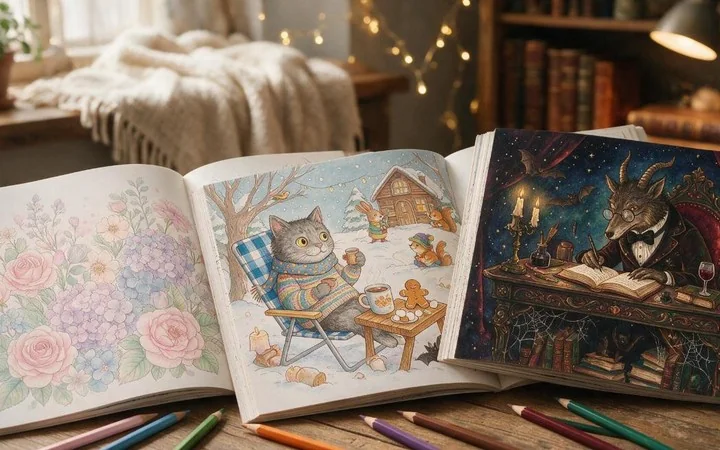
Calm botanicals, cosy scenes and denser mandala-style pages — every printable set is made to actually hold your attention.
Browse the coloring collection →