The best paper for printable coloring pages
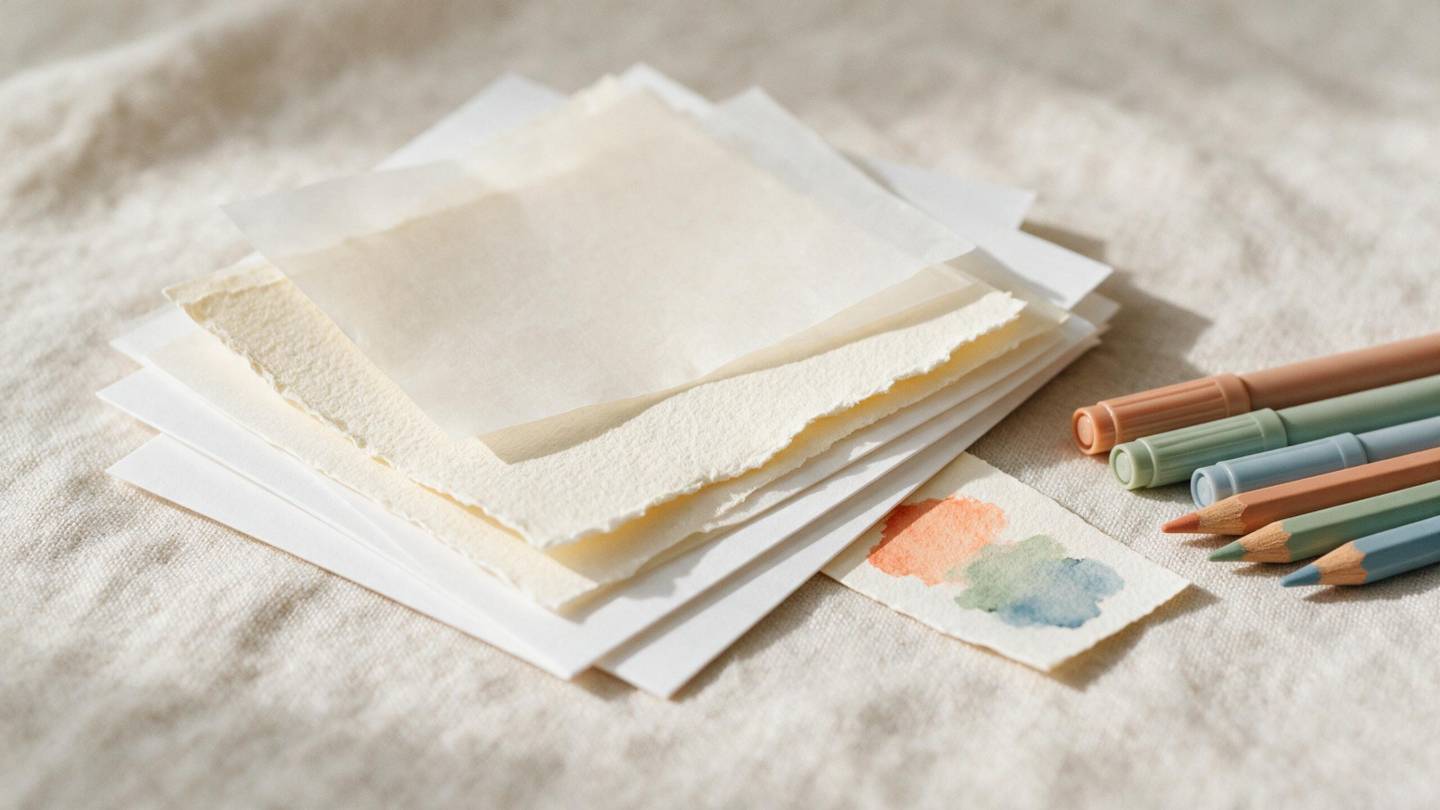
The fastest way to make a beautiful coloring page look mediocre is to print it on whatever was already in the tray. Paper decides whether your markers bleed, whether coloured pencil layers build up or skid, and whether the page buckles the moment it meets water. It is the cheapest upgrade available to you.
Two numbers to understand first
Weight is how thick and sturdy the sheet is, measured in gsm (grams per square metre) or lb. Ordinary copy paper is around 80 gsm / 20 lb. Light cardstock starts around 160 gsm / 60 lb cover. Heavier paper resists bleed-through and buckling, and simply feels better to work on.
Texture — sometimes called tooth — is how rough the surface is. Rough paper grabs pigment, which is what coloured pencil needs to build up layers. Smooth paper lets ink sit on the surface and spread evenly, which is what markers need. The two requirements pull in opposite directions, which is why there is no single best paper.
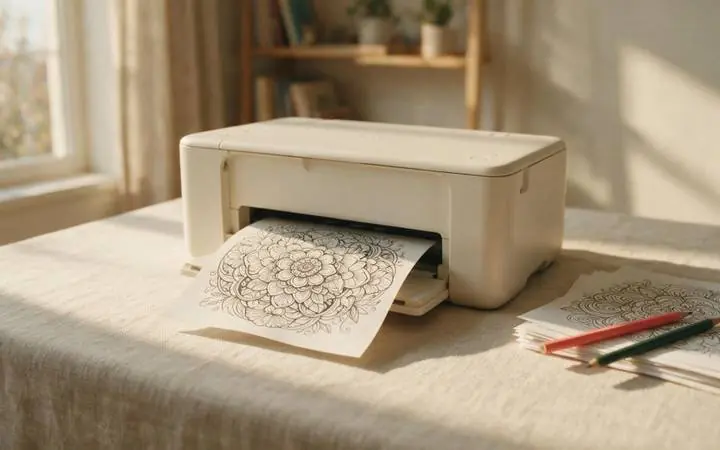
Check your printer before you buy a reamMost home inkjets top out somewhere around 200–250 gsm, and many can only take heavy stock through a rear or manual feed tray rather than the main cassette. Your printer's spec sheet lists the maximum media weight. Buying 300 gsm for a printer that maxes at 200 is a jam waiting to happen.
Matched to what you colour with
Coloured pencil
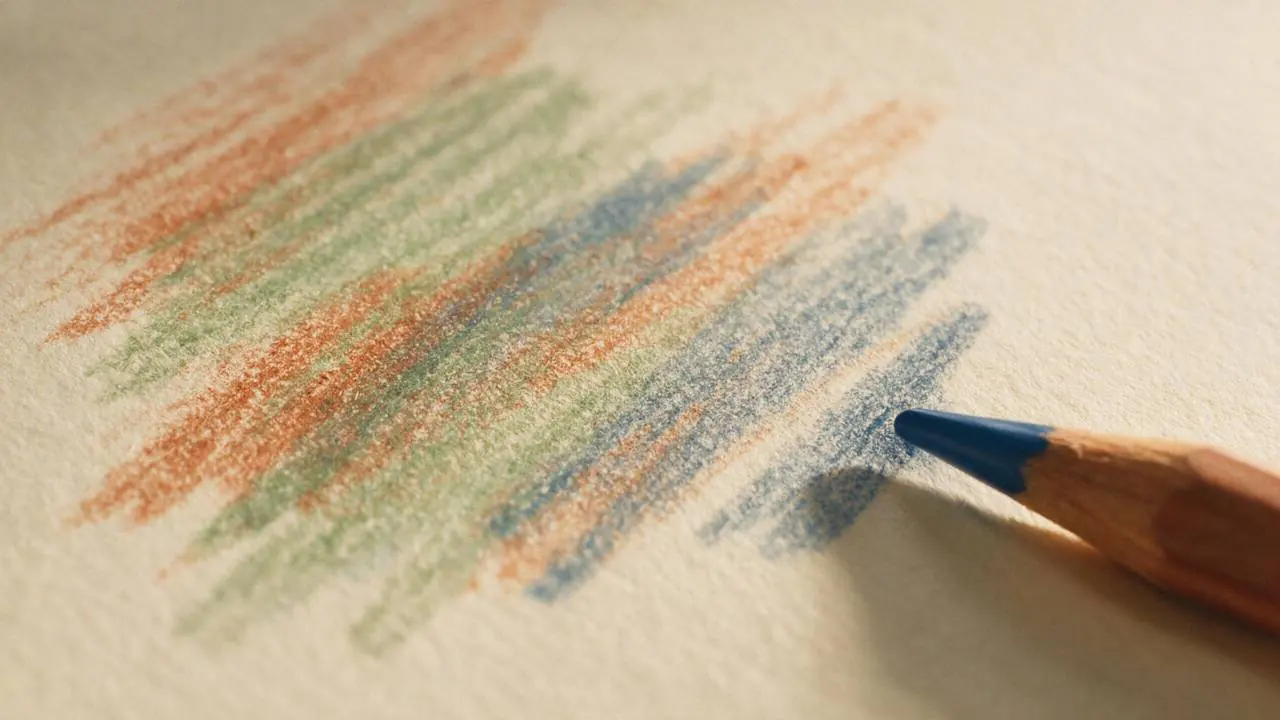
You want weight and a little tooth. Around 160–200 gsm smooth or vellum-finish cardstock is the sweet spot. Enough surface texture to take five or six layers before the tooth fills up, enough thickness that heavy pressure does not emboss the page. Avoid glossy photo paper entirely — wax slides straight off it.
Alcohol markers (Copic, Ohuhu, Arteza)
Alcohol ink goes straight through normal paper. Use dedicated marker paper if you can print on it, or a smooth 200–250 gsm cardstock otherwise. Either way, put a scrap sheet underneath — some bleed-through is normal and you would rather it land on scrap than on the next page. Smooth beats textured here: tooth causes streaking as the ink dries unevenly.
Water-based markers and gel pens
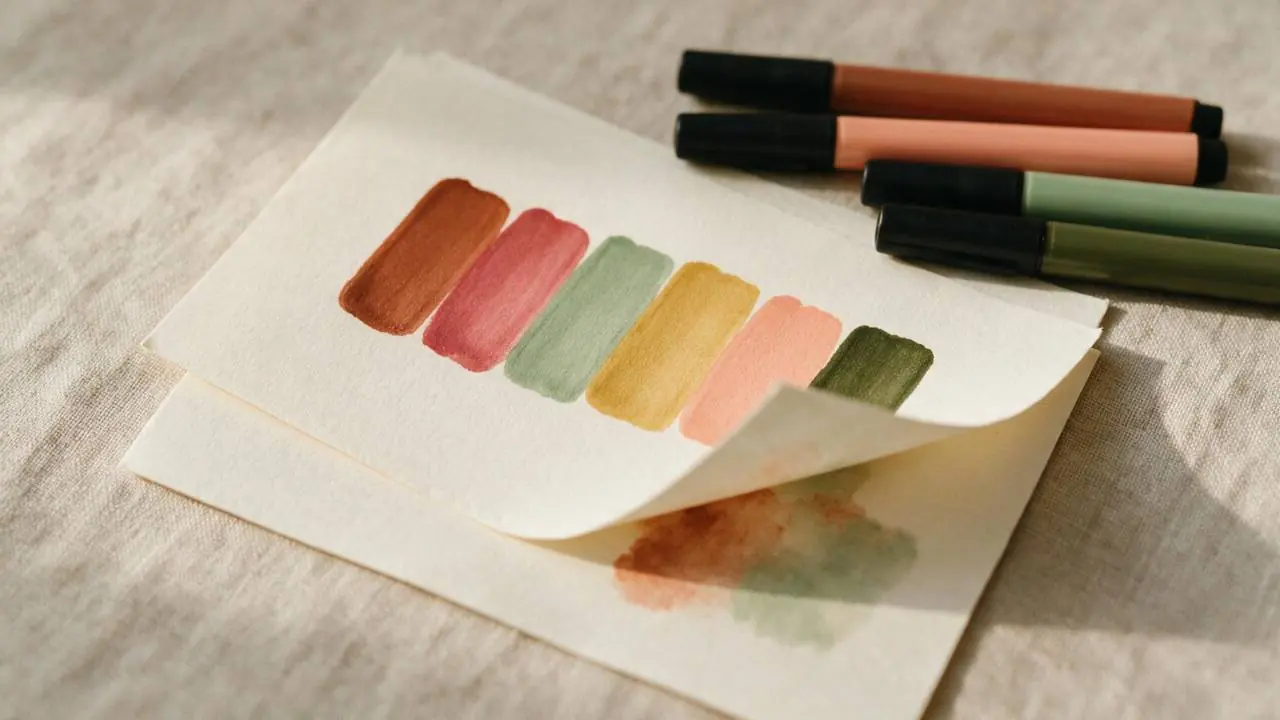
Much more forgiving. 120–160 gsm is plenty. Gel pens in particular do well on smooth bright-white stock, which keeps the metallics and glitters looking sharp rather than muddy.
Watercolour and water-based paint
This is the one case where ordinary cardstock will not do. You need watercolour paper, 200 gsm and up, cold-press if you like visible texture, hot-press if you want smooth. Two practical notes: check your printer can feed it at all, and be aware that inkjet ink is water-soluble — a wash will smear freshly printed lines. Laser toner does not run, so if you have laser access, use it for anything you plan to paint.
Just relaxing with pencils on the sofa
Plain 80–100 gsm copy paper is genuinely fine, and reprinting costs almost nothing. Do not let paper snobbery get between you and colouring something.
Quick reference
| What you colour with | Weight | Surface |
|---|---|---|
| Coloured pencil | 160–200 gsm | Smooth to lightly toothed cardstock |
| Alcohol markers | 200–250 gsm, or marker paper | Smooth, bright white |
| Water-based markers | 120–160 gsm | Smooth |
| Gel pens | 120–160 gsm | Smooth, bright white |
| Watercolour | 200 gsm+ | Watercolour paper — laser print if possible |
| Casual / practice | 80–100 gsm | Plain copy paper |
Three things worth knowing when you buy
- Buy inkjet-rated stock for an inkjet. Cardstock sold for laser printers or die-cutting is often coated in a way that leaves inkjet ink sitting wet on the surface for far too long. The packaging will say.
- Brightness affects how colours read. A brighter white makes everything you lay down look more saturated. If your work looks flat, the paper may be the reason before your pencils are.
- Buy one small pack first. Papers vary far more between brands than the specs suggest. Print the same page on two or three candidates and colour a corner of each before committing to a ream.
Once you have your paper sorted, the other half of the equation is the print settings — scaling, ink mode and margins. That is covered in how to print coloring pages at home.
Something to test your new paper on
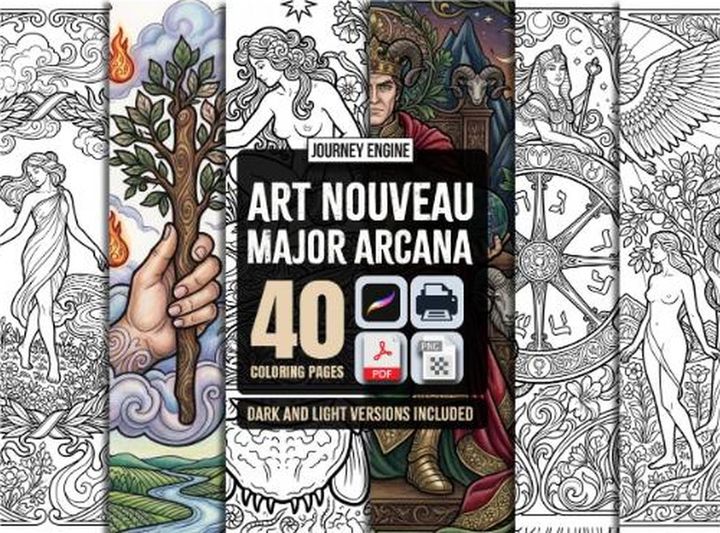
Every Journey Engine coloring collection is a full set of high-resolution printable pages, sized for both A4 and US Letter.
Browse the collections →