Can paint by numbers help with burnout?
By clinical definition, burnout isn't even a diagnosis. The World Health Organization classifies it as an occupational phenomenon, not a medical condition — the result of chronic workplace stress that hasn't been successfully managed, not a personal failing. That distinction matters, because it reframes the fix: burnout doesn't need to be cured, it needs to be counter-balanced. And one of the more surprisingly well-studied counter-balances is something you can pick up for the price of a coffee subscription: a paint-by-numbers canvas.
What burnout actually looks like
The WHO's ICD-11 defines burnout through three dimensions: feelings of energy depletion or exhaustion, increased mental distance from your job (or growing cynicism about it), and a reduced sense of professional efficacy. It builds slowly, from chronic stress that was never fully managed — which is why it rarely announces itself with a single bad day. Most people notice it as a fog that doesn't lift, not a crash.
How many people are dealing with it right now
Recent workplace surveys put U.S. burnout rates around 55%, with 72% of workers reporting moderate-to-high stress — the highest level recorded in seven years. It isn't evenly distributed: Gen Z workers report the highest burnout rate at 66%, ahead of Millennials (58%), Gen X (53%), and Baby Boomers (37%). Hours matter — burnout risk roughly doubles once a workweek crosses 60 hours — and so does a newer factor: employees who use AI tools heavily at work report burnout at 45%, compared with 35% among those who don't, even as adoption keeps climbing.
Most of it stays invisible, too. Around 42% of burned-out employees never tell their manager, and among those who do speak up, nearly as many say nothing changed afterward. That gap is part of why a personal, low-friction coping tool matters — you can't always wait on a workplace to fix itself first.
Why your brain needs an off-ramp, not another task
Psychologist Mihaly Csikszentmihalyi's research on "flow" — total absorption in an activity, where time seems to disappear — found that flow states reliably show up when a task has clear goals, immediate feedback, and a difficulty level just slightly above your current skill. Activities that hit all three have been linked to measurably lower physiological stress markers. The catch is that most "relaxing" habits people reach for after a burnout day — scrolling, television — don't actually meet those conditions. They're passive. Flow requires just enough active engagement to pull your attention fully into the present, away from whatever's looping in your head.
What the research says about art-making and stress
A 2016 Drexel University study had 39 adults make art for 45 minutes and measured their cortisol — a primary stress hormone — before and after. About 75% showed a measurable drop in cortisol, and notably, the effect held regardless of prior art experience or self-rated skill. You didn't need to be "good at art" to get the benefit.
A more targeted trial, published in Frontiers in Psychology, ran a six-week mindful-compassion art-based program with 56 healthcare workers — a population with unusually high burnout rates — against a waitlist control group. The treatment group showed a statistically significant drop in emotional exhaustion that was still present, and larger, at the 12-week follow-up, alongside measurable gains in mindful awareness and self-compassion. Zero participants dropped out over the full six weeks, which is its own small data point about how sustainable this kind of practice can be.
Why paint by numbers specifically fits the brief
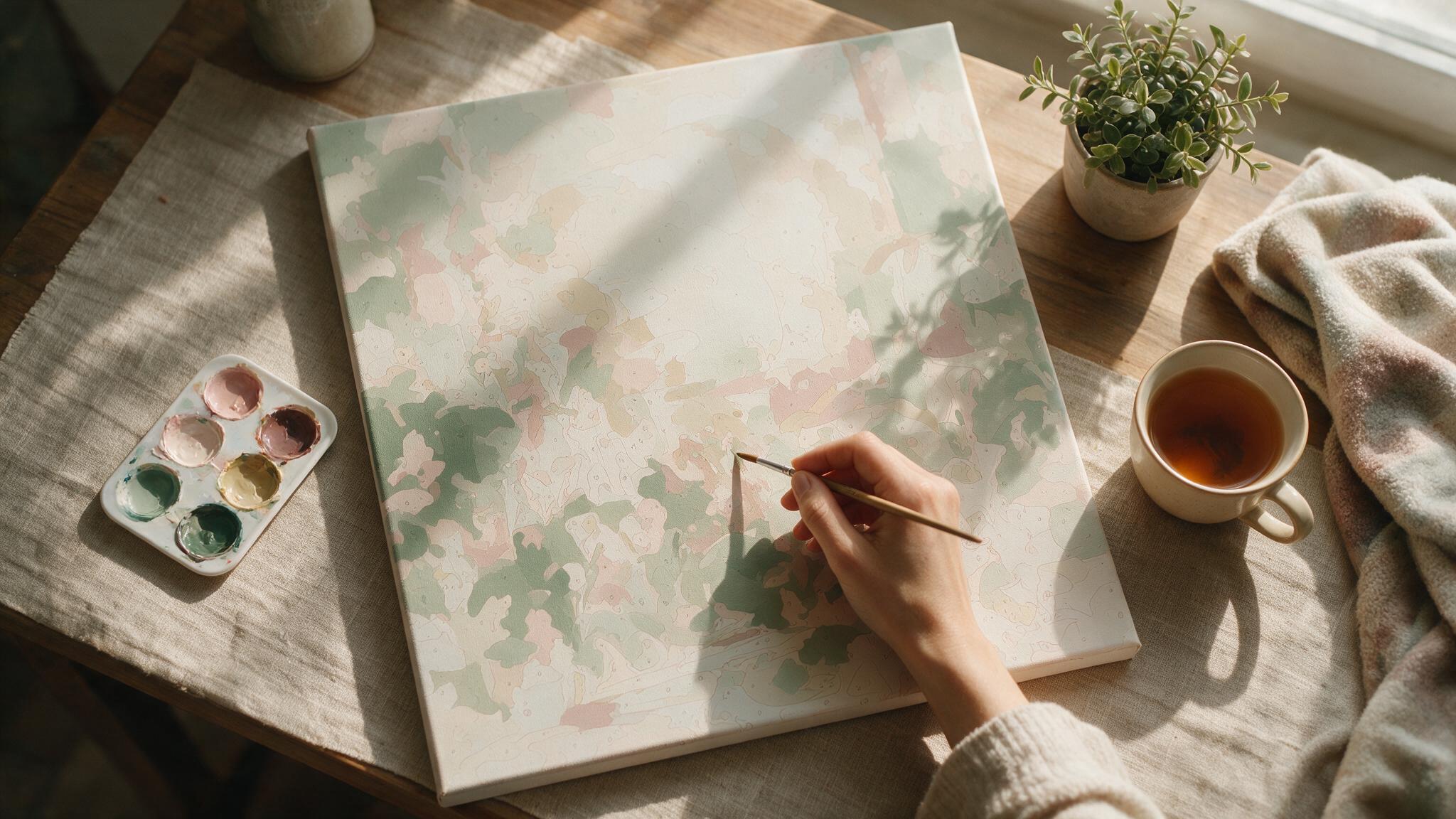
General art-making asks something the average burned-out person doesn't have much left to give: a blank page and a decision about what to make of it. Paint by numbers removes that step entirely, which is exactly why it lines up so well with the research above.
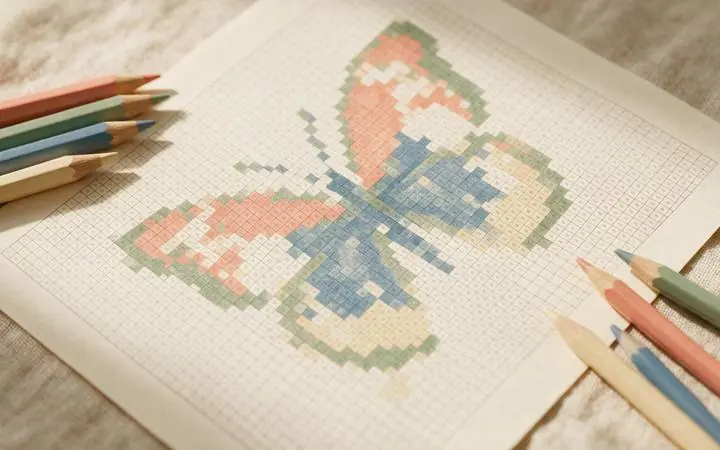
- Built-in clear goals and instant feedback. Fill region 14 with the matching blue, see it done immediately — that's the flow formula, pre-loaded.
- The benefit doesn't require skill. Per the Drexel finding, stress reduction from art-making isn't gated behind talent, which matters for a hobby that's meant to lower pressure, not add a new one.
- Repetitive, contained motion. Small, bounded brush strokes create the same rhythmic, meditative quality that's been observed in other structured crafts like knitting and adult coloring.
- A visibly finished thing. A completed canvas is tangible proof of effort that paid off — a direct counter to burnout's "reduced sense of accomplishment" symptom.
- A real screen break, if you want one. Physical kits pull your hands and eyes off a device entirely; digital kits still work if a screen break isn't the point and portability is.
How to use it without turning it into another obligation
The fastest way to ruin a stress-relief hobby is to treat it like a project with a deadline. A few things keep it working the way the research suggests it should:
- Cap sessions at 20–40 minutes. Consistency beats duration — the Drexel study saw its effect in 45 minutes, but shorter, more regular sessions add up.
- Match the difficulty to your mood, not your ambition. Our guide to choosing a colour count covers this — more regions isn't more relaxing, it's more work.
- Give it a fixed slot, not leftover time. A lunch break or a wind-down window before bed works better than "whenever I get a minute."
- Put the phone in another room. A single notification is enough to pull you out of flow, and most of the benefit lives in staying in it.
- Don't chase finishing the kit. Stopping mid-canvas because the session's over is fine. Reintroducing a completion deadline just rebuilds the pressure you picked this up to escape.
When a hobby isn't enough
Paint by numbers is a low-cost, evidence-backed way to interrupt a stress response, not a treatment plan. If what you're feeling has stuck around for months, includes persistent hopelessness, or has pulled you away from things and people you'd normally care about, that's worth raising with a doctor or therapist. A canvas can be part of how you recover; it isn't a substitute for addressing what's actually depleting you.
Quick answers
Is paint by numbers actually good for stress and burnout? Early research on art-making shows measurable drops in stress hormones regardless of skill level, and structured art programs have produced significant, lasting reductions in burnout-related exhaustion. It works best as a regular, low-pressure habit, not a one-time fix.
How long should I paint to notice a difference? The cortisol study above used 45-minute sessions, but even 20 to 30 minutes of focused, phone-free painting is enough to shift you out of a stress response.
Digital or physical kits — does it matter for burnout relief? Physical kits guarantee a full screen break, which helps if notifications are part of what's burning you out. Digital kits are easier to travel with and clean up after. Both deliver the same structured-focus, skill-independent benefits.
Is burnout a mental illness? Not by the WHO's definition — it's classified as an occupational phenomenon resulting from chronic workplace stress, not a medical diagnosis. That doesn't make the exhaustion less real; it just means the fix usually starts with rebalancing stress, not treating an illness.
Start with one small canvas tonight
No art background required, no deadline attached — just twenty focused minutes and a set of matched colours.
Browse Paint by Numbers →